

Early STEM Learning at Our Childcare Centres
At Oz Education, children from 6 weeks to 6 years learn science, technology, engineering and maths through everyday play: building, experimenting, exploring nature and solving problems. Seven of our centres are certified by Little Scientists Australia, and STEM is part of every day at no extra cost.
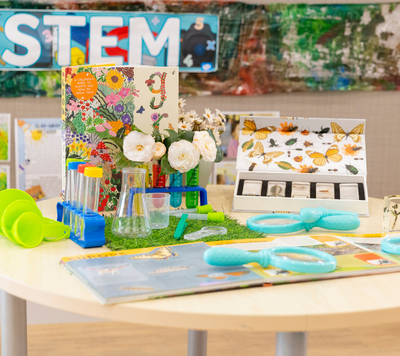
Ages: 6 weeks–6 years
When: woven into every day
Certified: 7 Little Scientists centres
Cost: $0 — included in your daily fee.
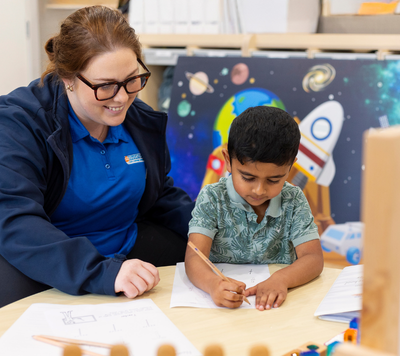
Curious minds, future-ready skills
The world your child will grow up in will reward people who can ask good questions, think creatively and solve problems. Those skills start long before school, in the moments a toddler wonders why the block tower fell or a four-year-old tests whether a leaf will float.
At Oz Education, we make sure your child doesn’t miss those moments. Our educators turn everyday curiosity into real learning, so children build the thinking skills, confidence and resilience that set them up for school and for life.
What STEM looks like at each age
| Age | Program | What it looks like |
| 6 weeks – 2 years | Platypus Program | Sensory play, cause and effect (rolling, dropping, pouring), water and texture play |
| 2 – 3 years | Koala Program | Stacking, sorting by colour and size, simple building, exploring nature |
| 3-4 years | Kangaroo | Predicting and testing, measuring, magnets, bug and plant investigations |
| 4-6 years | Lizard Preschool & Kinder | Engineering challenges, coding toys, simple experiments, recording results, plus Mathseeds |
Certified by Little Scientists Australia
Little Scientists Australia is a national early STEM education initiative that trains early childhood educators to deliver inquiry-based learning. Seven Oz Education centres are certified Little Scientists Houses: Homebush, Lidcombe, Auburn, Redfern, Fairfield, Tuggerah and Dallas. Every Oz Education centre follows the same hands-on STEM approach.
Our educators take part in ongoing Little Scientists professional learning, so they know how to guide children’s questions with open-ended prompts, let children test their own ideas, and document their discoveries. You’ll see these investigations in your child’s digital portfolio.
How our STEM approach works
- Children lead, educators guide. We follow children’s questions and interests rather than a fixed worksheet.
- Hands-on first. Real materials, real outdoor spaces, real experiments.
- Thinking out loud. Educators encourage children to predict, test, reflect and explain, building early scientific thinking.
- Connected to everyday life. STEM shows up in our gardening, cooking and outdoor play, not just at a STEM table.
- Aligned to the EYLF V2.0. Our STEM learning supports the framework’s outcomes for confident, involved learners.
Skills your child builds
- Curiosity and a love of discovery
- Problem solving and critical thinking
- Creativity and “out of the box” ideas
- Persistence and resilience when things don’t work first time
- Working together and sharing ideas
- Early maths and science language

Give your child a curious start
Enquire today to see our STEM learning in action and find a place for your child at a centre near you.
Frequently Asked Questions
What is STEM education in early childhood?
STEM stands for Science, Technology, Engineering and Mathematics. In early childhood, it means children explore, ask questions and solve problems through hands-on play and discovery.
What does STEM look like for babies and toddlers?
For babies, it’s sensory and cause-and-effect play like pouring water or rolling balls. Toddlers sort, stack, build and explore nature, learning how the world works through their hands.
What is Little Scientists Australia certification?
Little Scientists Australia trains early childhood educators in inquiry-based STEM. Centres that meet its quality standards are certified as Little Scientists Houses. Our Homebush, Lidcombe, Auburn, Redfern, Fairfield, Tuggerah and Dallas centres are certified.
Is STEM learning play-based or structured?
Both. Most STEM learning is play-based and led by children’s interests, with educators planning investigations and guiding children’s thinking.
Does STEM mean screen time?
Mostly no. Our STEM program is hands-on. Technology for young children includes things like magnifying glasses, magnets and coding toys, with brief, guided screen use for preschoolers only.
Is STEM included in our daily fee?
Yes. STEM is part of every day at Oz Education, with no extra cost to families.
How does STEM help my child get ready for school?
STEM builds problem solving, communication, persistence and confidence, plus early maths and science language, which all support a smooth start to school.
How can I support STEM learning at home?
Ask “what do you think will happen?”, cook and measure together, explore the backyard or a park, and let your child build and test their own ideas. See our Early Learning & STEM blog for more ideas.